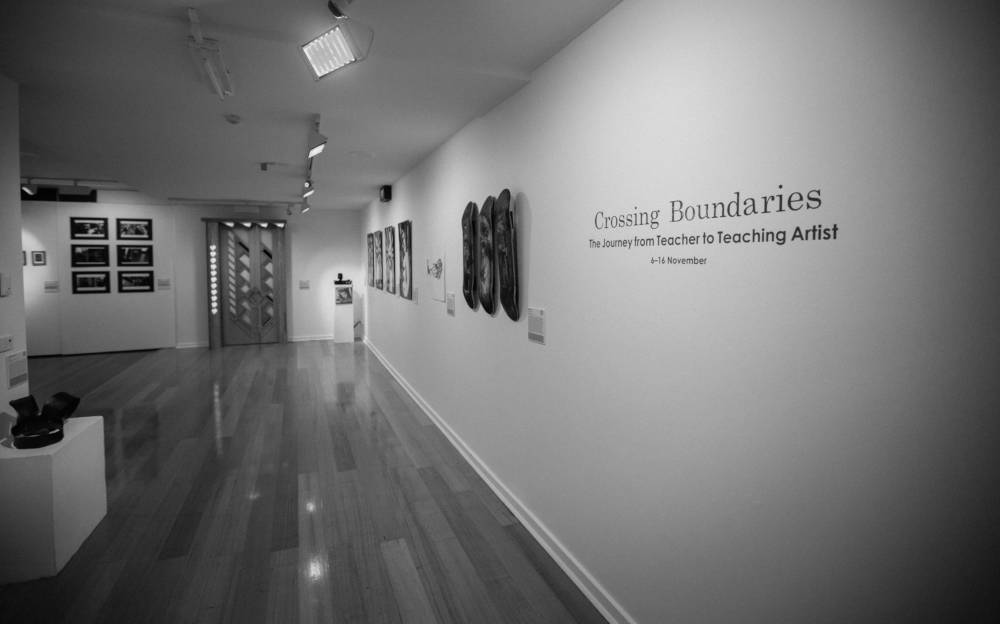
Crossing Boundaries
Group Exhibition
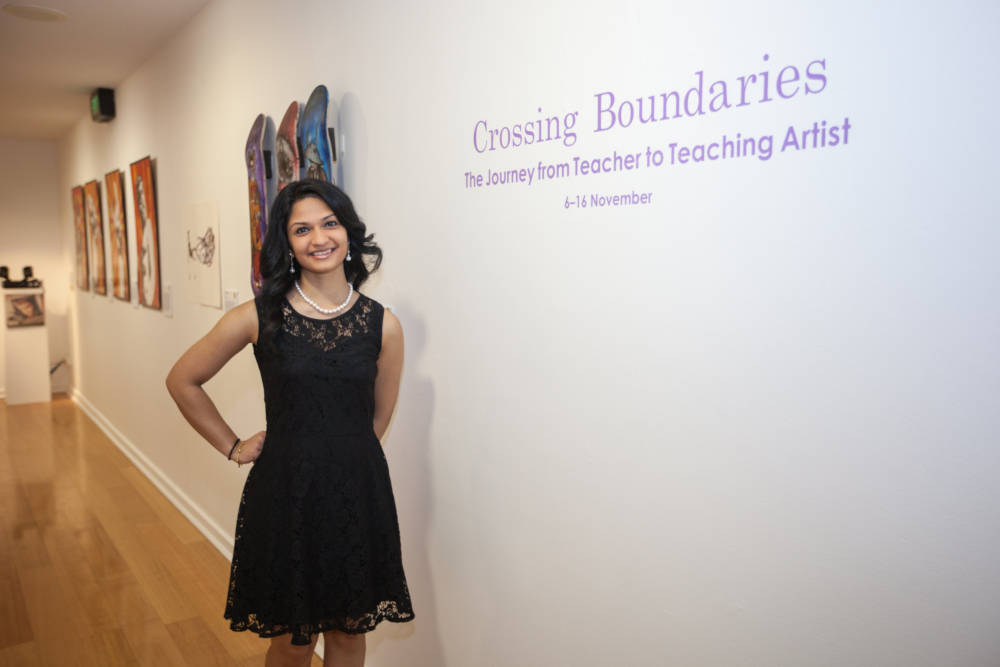
Crossing Boundaries:
The Journey From Teacher to Teaching Artist
George Paton Gallery
6-16 November 2012
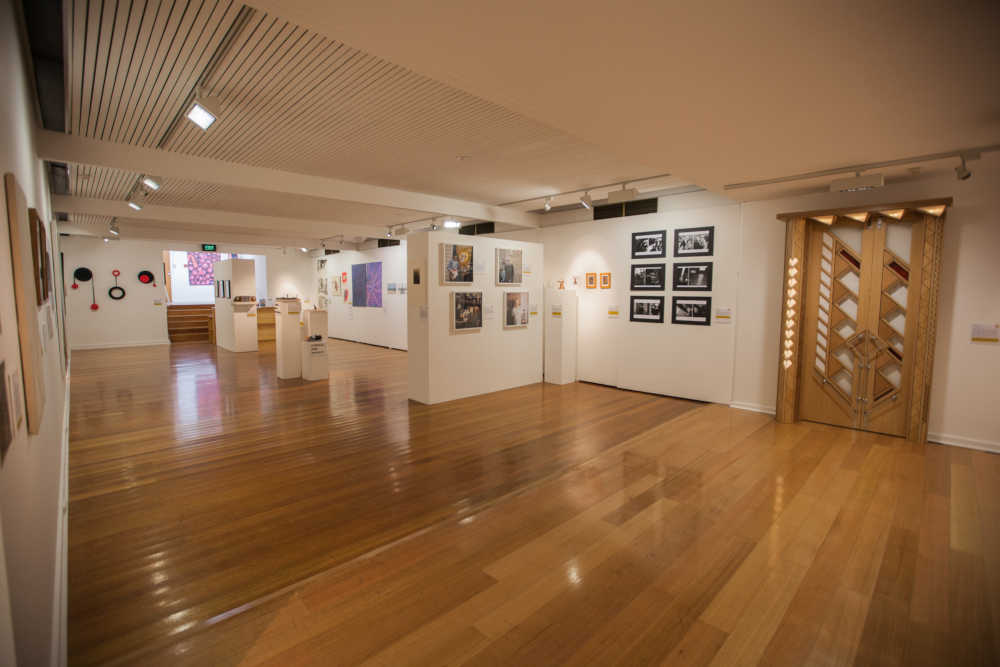
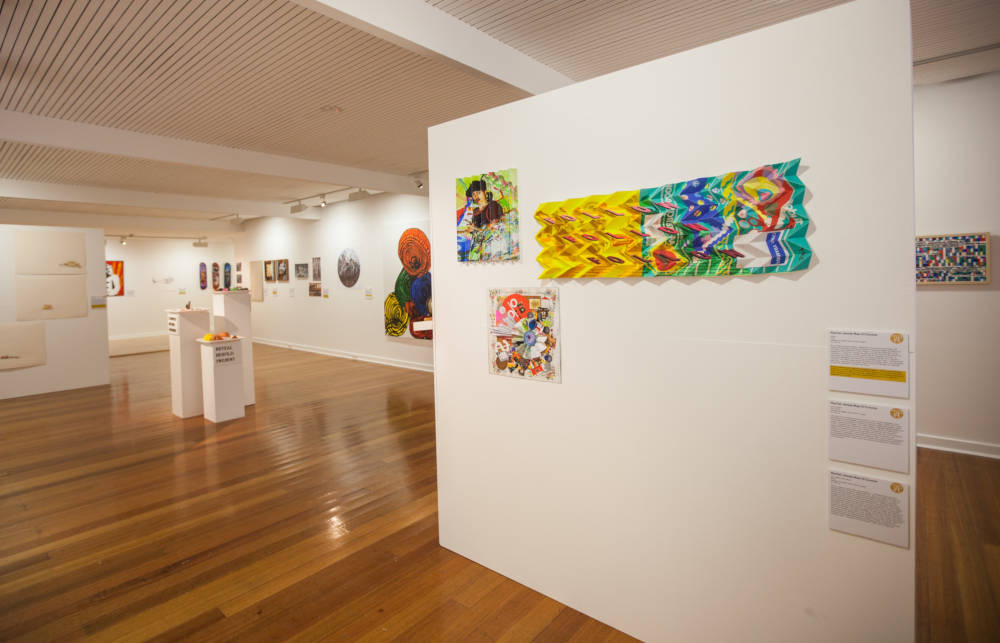
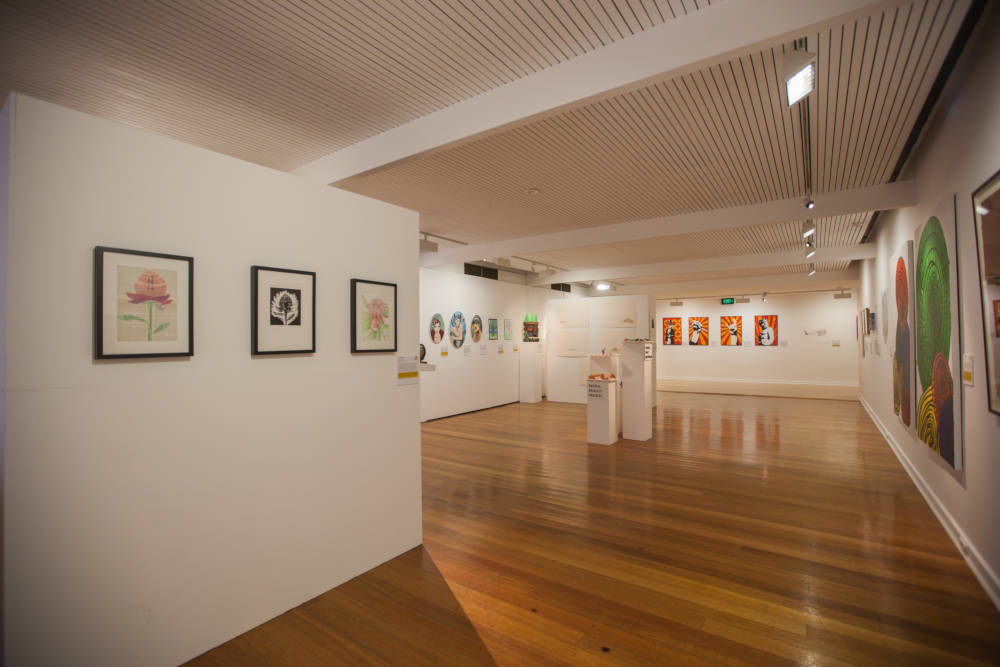
Held at the George Paton Gallery in Melbourne University, the Crossing Boundaries exhibition featured over 60 works of art by twenty-seven newly qualified secondary school art educators - graduates of Masters of Teaching (Art) programme. The artists creatively and critically explored the realities of being both an artist and a teacher.
ARTIST STATEMENT
Many of us have heard of the phrase that expresses how the absence of something increases our sense of value and affection towards it; absence or “distance makes the heart grow fonder”. Whilst this proverb is frequently used in the context of human relationships that experience geographical separation, in this circumstance, I share the equivalent sentiment in relation to the increasing fondness that I feel towards my homeland, Thailand.
Read More
Despite having lived in Melbourne for seven years, during which I have felt physically distant from my country of origin and family who live in Bangkok, I have grown to tug my roots closer to my spirit through art. My cultural background of both Indian and Thai converge to produce art that depicts an aesthetic fusion from the wealth of both heritages.
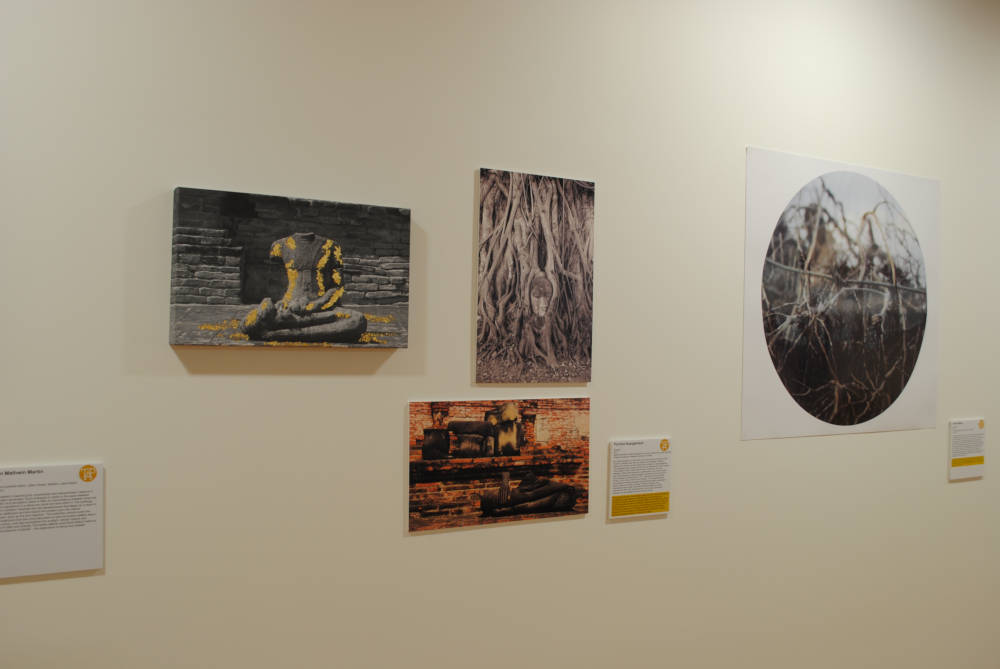
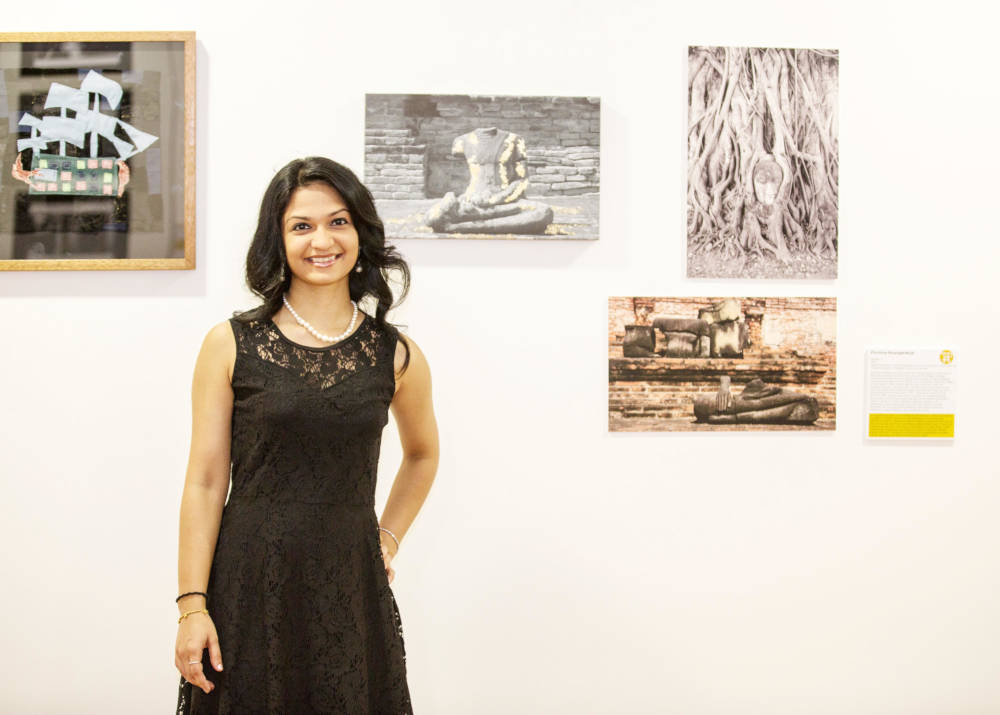
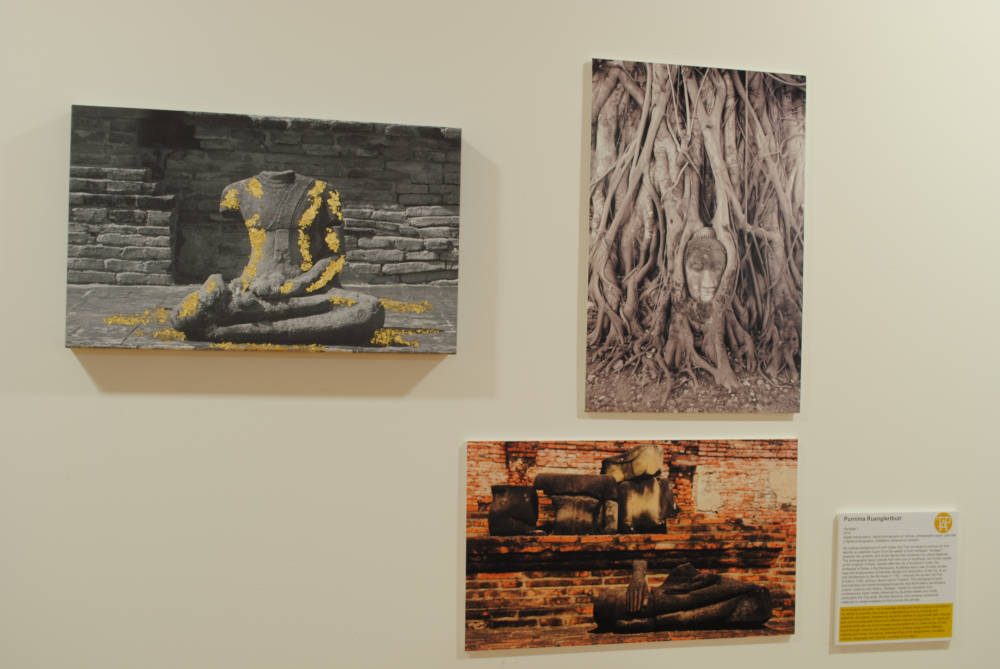
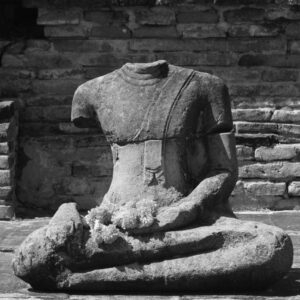
The series of photographs in the installation, Heritage 1 (2012) forms one of the multitudes of my works, which visually explores the symbolic and divine figures that constitute my cultural legacies; they exemplify my mystical union towards the opulent histories of Thailand and India. Heritage 1 depicts scenes from the ruins of Ayutthaya, the former capital of the kingdom of Siam, which is now a UNESCO World Heritage site. Named after the city of Ayodhya in India, the birthplace of Rama in the Ramayana, Ayutthaya was a site of mass murder, rape and enslavement of Siamese people and destruction of the city, its art and architecture by the Burmese in 1767. I retraced the ancient city that thrived in 1350, during a recent visit to Thailand for the personal and cultural significance it holds.
The photographic medium enables the capture of a rapid succession of images that can precisely illustrate the crumbling headless Buddhas, Buddha head nestled in roots, deteriorating facades and aged stone that allude to the past splendour of the city. The photographs typify documentary and travel photography genres that illuminates a landscape’s culture, customs and history. Several photographs are printed on canvas, dismissing traditional media-orientated forms of artistic practice, imbuing a decorative element. Heritage 1 takes its inspiration from contemporary Asian artists influenced by Buddhist beliefs and motifs, particularly the Thai artist, Montien Boonma, who employs a range of ephemeral materials including gold leaf and fragrant spices to create contemplative installations that provoke the senses.
As a museum educator, my experiences and knowledge of Asia and Asian customs, experience of working with English and non-English students and my continuing engagement in my own art practice, strengthens my ability to promote intercultural understanding among students with authentic art objects, heightening students’ abilities to appreciate their cultures and communicate with those from different cultural backgrounds. Asia literacy equips young Australian audiences to make sense of their world – understanding the geographies, societies, cultures, languages and diverse countries of our region. Such interest has seen me develop primary, secondary, adult and tertiary education programs for the Basil Sellers Art Prize 2012 exhibition at the Ian Potter Museum of Art that promotes inclusive museum education practices.
GALLERY
ARTWORKS
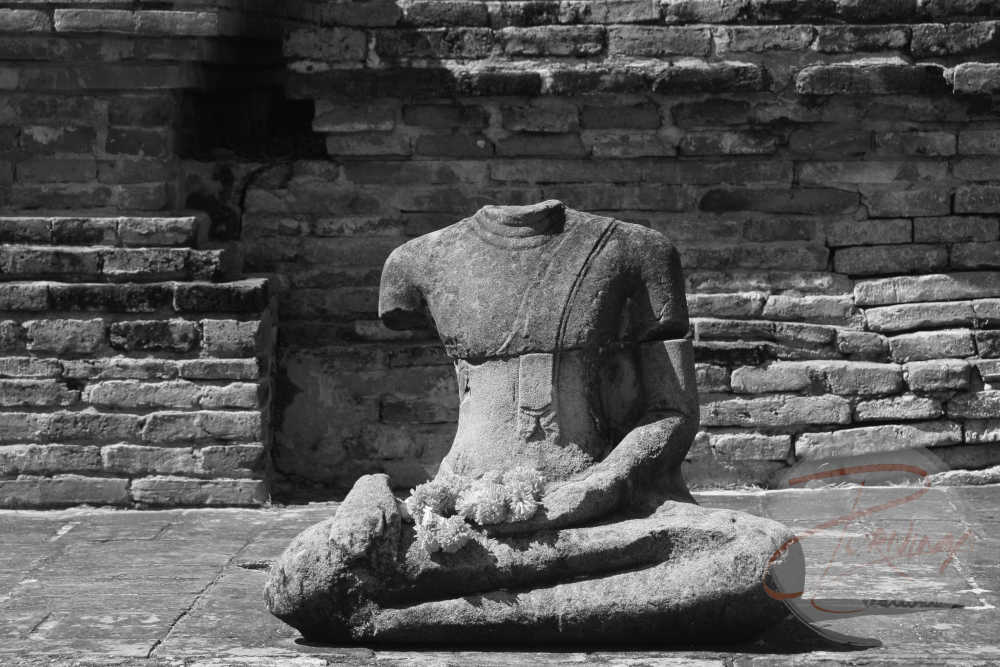


Heritage 1 (detail), 2012
digital manipulation, digital photographs on canvas and photographic paper
4 digital photographs, installation dimensions variable
The Exhibition